

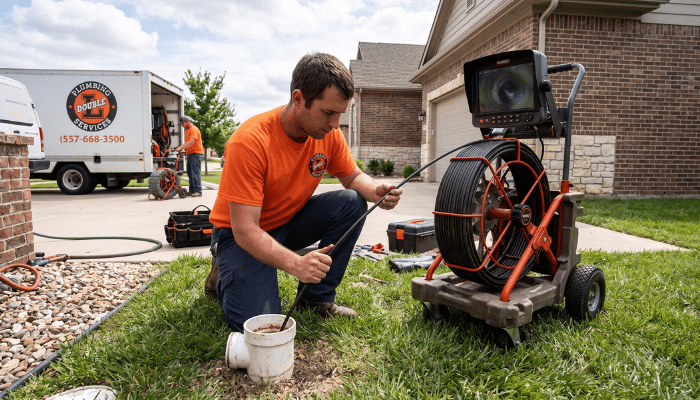
A plumbing camera inspection sends a waterproof, high-resolution camera on a flexible cable through your drain or sewer line and shows the inside of the pipe on a live monitor. It reveals clogs, tree-root intrusion, cracks, corrosion, grease buildup, and bellied or collapsed sections — all without digging up your yard. That's exactly why a camera inspection is one of the smartest moves you can make before buying an older home.
Most of your plumbing lives out of sight, underground or behind walls. A camera lets us look before we dig, so you're making decisions based on what's actually there instead of a guess. Here's what the camera sees and when it's worth doing.
How a Camera Inspection Works
The tool is simple in concept: a small, waterproof camera head mounted on a long, flexible push cable, fed into your line through a cleanout, drain, or fixture opening. As the camera travels down the pipe, it streams video to a monitor in real time, and a built-in locator lets us pinpoint the exact spot and depth of any problem from above ground. There's no guesswork and no exploratory digging — the whole point of a plumbing video camera inspection is to see the problem before touching the pipe.
What the Camera Actually Shows
Once the camera is in the line, the picture tells the story. Common findings include:
- Tree-root intrusion — roots seek out the moisture in sewer lines and force their way in through joints and cracks. We've literally pulled a four-foot root ball out of a sewer line, and a camera shows exactly where they're getting in.
- Cracks, breaks, and collapsed pipe — from ground shifting, age, or North Texas clay soil that swells and contracts with the seasons.
- Bellies (low spots) — a section that has sagged so waste and water pool instead of flowing, causing repeat backups.
- Corrosion and scale — especially in older cast iron or galvanized pipes common in homes built before the 1970s.
- Grease and debris buildup — the slow-building layer behind a lot of recurring kitchen-line clogs.
- Foreign objects — everything from a lost toy to flushed "flushable" wipes.
Why "No Digging" Matters
Before cameras, finding an underground problem often meant digging based on best-guess. Now we pinpoint the problem with plumbing diagnosis first, then dig once — in the right place — if a repair is even needed. That means less disruption to your yard, driveway, and landscaping, and a far more accurate quote, because we're pricing the actual issue instead of padding for the unknown.
Buying an Older Home? Scope the Line First
Here's the one most buyers don't know: a standard home inspection almost never includes the sewer line. Inspectors run the water and check for leaks under sinks, but they can't see what's happening in the main line running out to the street or septic system. In an older North Texas home — think original cast iron drains, mature trees over the yard, decades of ground movement — that hidden line is often the single most expensive surprise waiting for a new owner.
A pre-purchase camera inspection closes that blind spot. For a small cost up front, you find out whether you're inheriting a healthy line or a five-figure sewer line repair or replacement — and either way, you negotiate from a position of knowledge. It's one of the most common reasons buyers around Azle, Weatherford, and Fort Worth call us.
Other Times a Camera Inspection Pays Off
Buying a home isn't the only smart trigger. Consider scoping the line when you're dealing with:
- Recurring backups. If you keep clearing the same drain, a camera finds the root cause instead of treating the symptom over and over — often the fix behind recurring sewer backups.
- A stubborn clog that won't stay gone. When a stubborn clog returns weeks after professional drain cleaning, there's usually a structural reason worth seeing.
- Before a remodel or new build. Confirming the condition and layout of existing lines protects your investment in a remodel or new construction project.
- Old trees near the line, or a home over 40 years old. Both raise the odds of root intrusion and pipe deterioration.
What Happens After the Inspection
The camera doesn't fix anything on its own — it diagnoses. Once we know exactly what and where the problem is, we walk you through the findings on the same screen we're watching and lay out your options, whether that's a targeted spot repair, a cleaning, or a full line replacement. No pressure, no mystery — just a clear picture and a straight recommendation.
Local, Licensed Eyes on Your Line
Double L Plumbing has served Azle, Weatherford, Fort Worth, and surrounding North Texas communities since 2006. As a family-owned, Master Plumber–led company, we've seen what these local soils and older housing stock do to sewer lines — and we'll show you exactly what's happening in yours. Whether you're troubleshooting a backup or protecting a home purchase, a camera inspection gives you answers before you spend.